
Credit Card Debt
Payoff Calculator
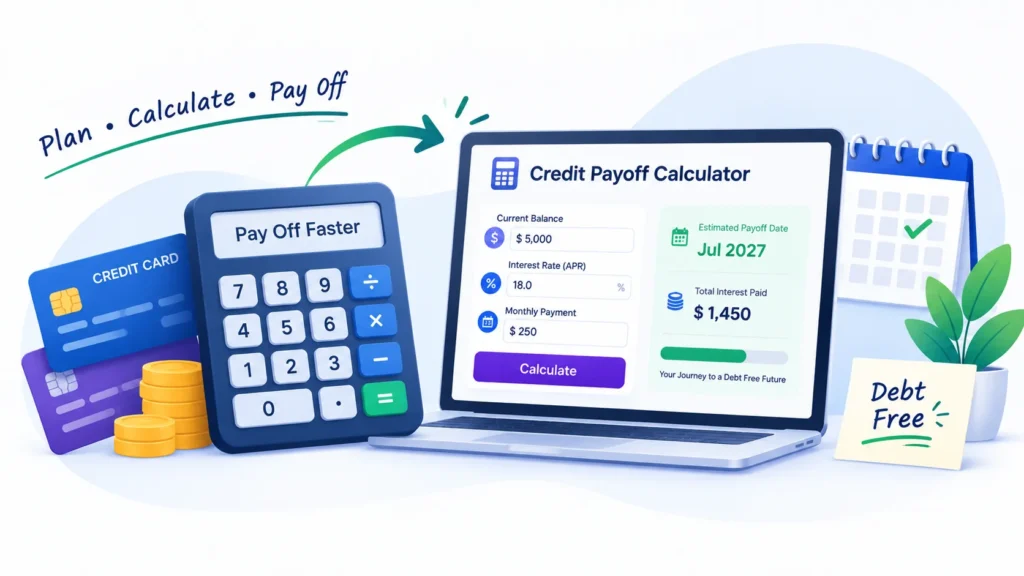
Use our free Credit Card Payoff Calculator to estimate how long it may take to pay off your credit card debt and how much interest you could pay. Enter your current balance, APR, and monthly payment to estimate your payoff timeline and explore how different payment amounts may affect your debt repayment. Results are estimates and may vary based on your card issuer’s interest calculation, fees, and payment timing.
Free Calculator | No Register | Fast | Accurate Result
Credit Card Payoff Calculator
Find out how long it will take to pay off your credit card balance and how much interest you will pay.
Results
How to Use the Credit Card Debt Payoff Calculator
Our credit card debt payoff calculator helps you estimate how long it may take to repay an outstanding credit card balance. It also helps you understand how your monthly payment and annual percentage rate (APR) can affect your repayment plan.
Follow these steps to use the calculator:
Enter your current balance: Type the amount you currently owe on your credit card.
Enter your APR: Use the annual percentage rate shown on your latest credit card statement.
Enter your monthly payment: Choose the amount you plan to pay toward the balance each month.
Calculate your results: Select the Calculate button to view your estimated repayment results.
Compare different payments: Repeat the calculation with a higher monthly payment to see how your repayment timeline may change.
Use figures from your latest statement whenever possible. Your actual results may differ because card issuers can calculate interest daily and may apply fees, different rates, or payment rules that this calculator does not model.
Practical Ways to Pay Off Credit Card Debt Faster
1. Pay more than the minimum when possible
Paying more than the required minimum can help reduce your balance faster and may lower the total interest paid over time. Choose an amount that fits your budget without leaving essential expenses unpaid.
2. Avoid adding new charges
If possible, avoid making additional purchases on the card while repaying the existing balance. New charges can offset the progress made through monthly payments.
3. Review your APR and account terms
Check your statement for the applicable interest rate, fees, promotional rates, and payment due date. A promotional rate may expire, so review the terms before estimating your long-term repayment cost.
4. Compare realistic monthly payments
Run the calculator with two or three payment amounts you can reasonably afford. Compare the estimated payoff time and interest rather than selecting a payment that is difficult to maintain.
5. Keep payments on time
Missing a payment may lead to fees or other account consequences. Set a reminder and check your issuer’s payment-processing deadlines.
6. Review your progress regularly
Update your balance and APR when your account details change. Recalculating with current information can help you assess whether your repayment plan remains realistic.
If you are struggling to make minimum payments, contact your card issuer to ask about available hardship options or seek guidance from a reputable nonprofit credit counselor.
Frequently Asked Questions
What is a credit card debt payoff calculator?What is a credit card debt payoff calculator?
A credit card debt payoff calculator estimates how long it may take to repay an outstanding balance and how much interest you may pay based on the balance, APR, and planned monthly payment.
How do I calculate how long it will take to pay off my credit card?
Enter your current balance, annual percentage rate, and planned monthly payment into the calculator. The estimated payoff period depends on the interest assumptions and whether your payment is sufficient to reduce the balance.
Does this calculator include credit card interest?
The calculator uses the APR entered by the user to estimate interest according to its calculation method. Actual interest may differ because issuers can use daily balance calculations, fees, and other account-specific rules.
What happens if my monthly payment is too low?
If your payment does not cover the interest and other charges added during a period, your balance may fail to decrease. Increase the payment if you can afford to do so, and check your account terms.
Will paying more each month reduce my total interest?
A higher regular payment will generally reduce the balance faster and can lower total interest when the other assumptions remain the same. The actual savings depend on your card’s terms and payment timing.
Can I use this calculator for multiple credit cards?
This calculator is designed around the balance, APR, and payment entered for a calculation. For multiple cards, calculate each balance separately or use a debt-planning method that accounts for all balances and interest rates.
Is the payoff date guaranteed?
No. The result is an estimate, not a guaranteed payoff date. New purchases, fees, changes in APR, missed payments, and differences in interest calculations can change the outcome.
Is this credit card payoff calculator financial advice?
No. It is an educational planning tool that provides estimates based on user-entered information. Review your card agreement and consider speaking with a qualified financial professional if you need help managing debt.