
⚡ Fast • Free • Easy
XML Sitemap Generator
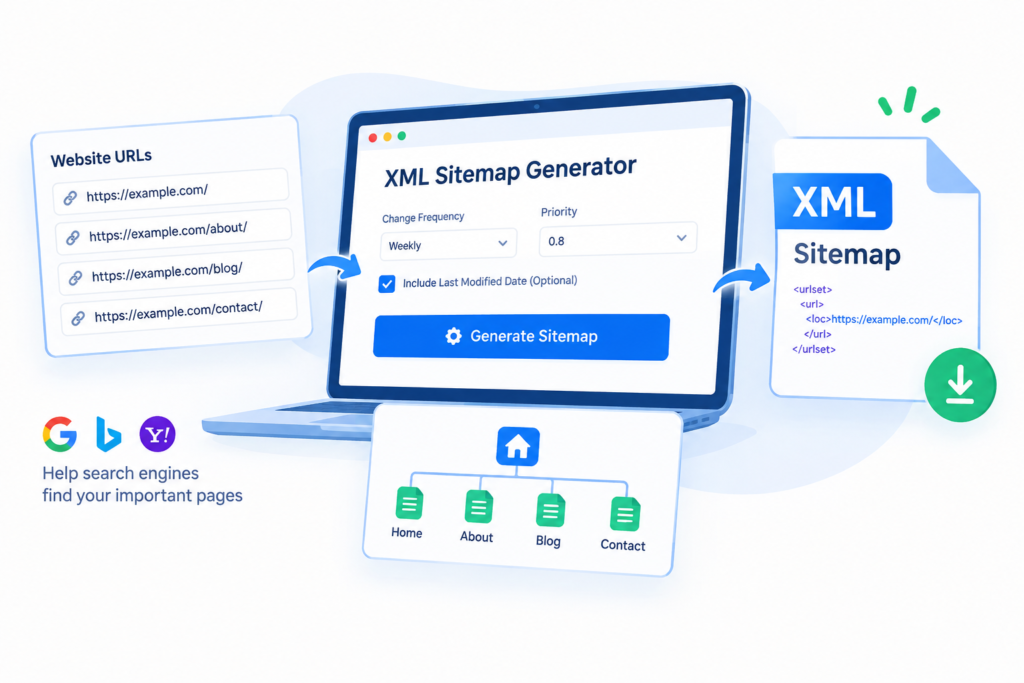
Create an XML sitemap from your website URLs with our free XML Sitemap Generator. Enter one URL per line, choose your preferred settings, and generate XML that you can review before using it on your website. A sitemap helps search engines discover important pages, but it does not guarantee indexing or higher rankings.
Free XML SiteMap Generator
XML Sitemap Generator
Paste a list of URLs to generate a standards-compliant XML sitemap file, ready to upload.
Result
How to Use the XML Sitemap Generator
Collect your website URLs: Make a list of the important pages you want search engines to discover.
Enter your URLs: Paste the complete URLs into the input field, using one URL per line.
Choose your settings: Select a change frequency and a priority value if these options are available in the tool.
Generate the sitemap: Click Generate Sitemap and review the XML output.
Check the results: Confirm that the URLs are correct, accessible, and point to the preferred versions of your pages.
Copy or download the file: Save the generated XML as
sitemap.xml.Publish and submit it: Place the file at the appropriate location on your website, then submit its URL through Google Search Console or Bing Webmaster Tools.
Frequently Asked Questions
What Is an XML Sitemap Generator?
An XML Sitemap Generator is a tool that creates a structured XML file containing the important URLs of a website. This file helps search engines discover and crawl website pages more efficiently.
Why Do I Need an XML Sitemap Generator?
An XML Sitemap Generator makes it easier to create and maintain a sitemap without manually writing XML code. It can be especially useful for websites with many pages or frequently changing content.
Is an XML Sitemap Generator Free to Use?
Yes, many XML Sitemap Generator tools are available for free. A free generator can create a basic sitemap that you can use to help search engines find your website URLs.
How Do I Create an XML Sitemap?
To create an XML sitemap, enter your website information into an XML Sitemap Generator and generate the sitemap file. After checking the generated URLs, upload the XML file to your website’s root directory.
Where Should I Put My XML Sitemap?
An XML sitemap is normally placed in the root directory of your website. For example, your sitemap may be accessible through a URL such as /sitemap.xml.
Does an XML Sitemap Improve SEO?
An XML sitemap does not automatically improve rankings, but it can help search engines discover and crawl important pages. This can be particularly useful for large websites, new websites, or sites with complex navigation.
How Do I Submit an XML Sitemap to Google?
You can submit your sitemap through Google Search Console. Add the sitemap URL in the Sitemaps section and submit it so Google can process the sitemap.
Can I Generate a Sitemap Without Coding?
Yes. An XML Sitemap Generator can create the sitemap automatically, so you generally do not need to write XML code manually.
What Information Does an XML Sitemap Contain?
An XML sitemap primarily contains website URLs and can also provide optional information such as the last modification date. Search engines use this information to better understand which URLs are available for crawling.
How Often Should an XML Sitemap Be Updated?
Your sitemap should be updated whenever important URLs are added, removed, or significantly changed. Websites with frequently updated content may need more regular sitemap updates.
Can an XML Sitemap Generator Work for Large Websites?
Yes, but very large websites may need multiple sitemap files combined through a sitemap index. This approach helps organize a large number of URLs into manageable sitemap files.
What Is the Difference Between an XML Sitemap and an HTML Sitemap?
An XML sitemap is primarily created for search-engine crawlers, while an HTML sitemap is designed for website visitors. An HTML sitemap provides a human-readable list of useful website pages.
Can I Use an XML Sitemap for a New Website?
Yes. A sitemap can be useful for a new website because it gives search engines a structured list of URLs that you want them to discover and crawl.
What Happens If My Sitemap Contains Broken URLs?
Broken or incorrect URLs can reduce the usefulness of your sitemap. Before submitting it, check that the listed URLs are valid, accessible, and represent pages you want search engines to crawl.
Do All Website Pages Need to Be in an XML Sitemap?
No. A sitemap should focus on important, indexable URLs that you want search engines to discover. Pages that should not be indexed generally should not be included simply to increase the sitemap’s URL count.robots.txt